



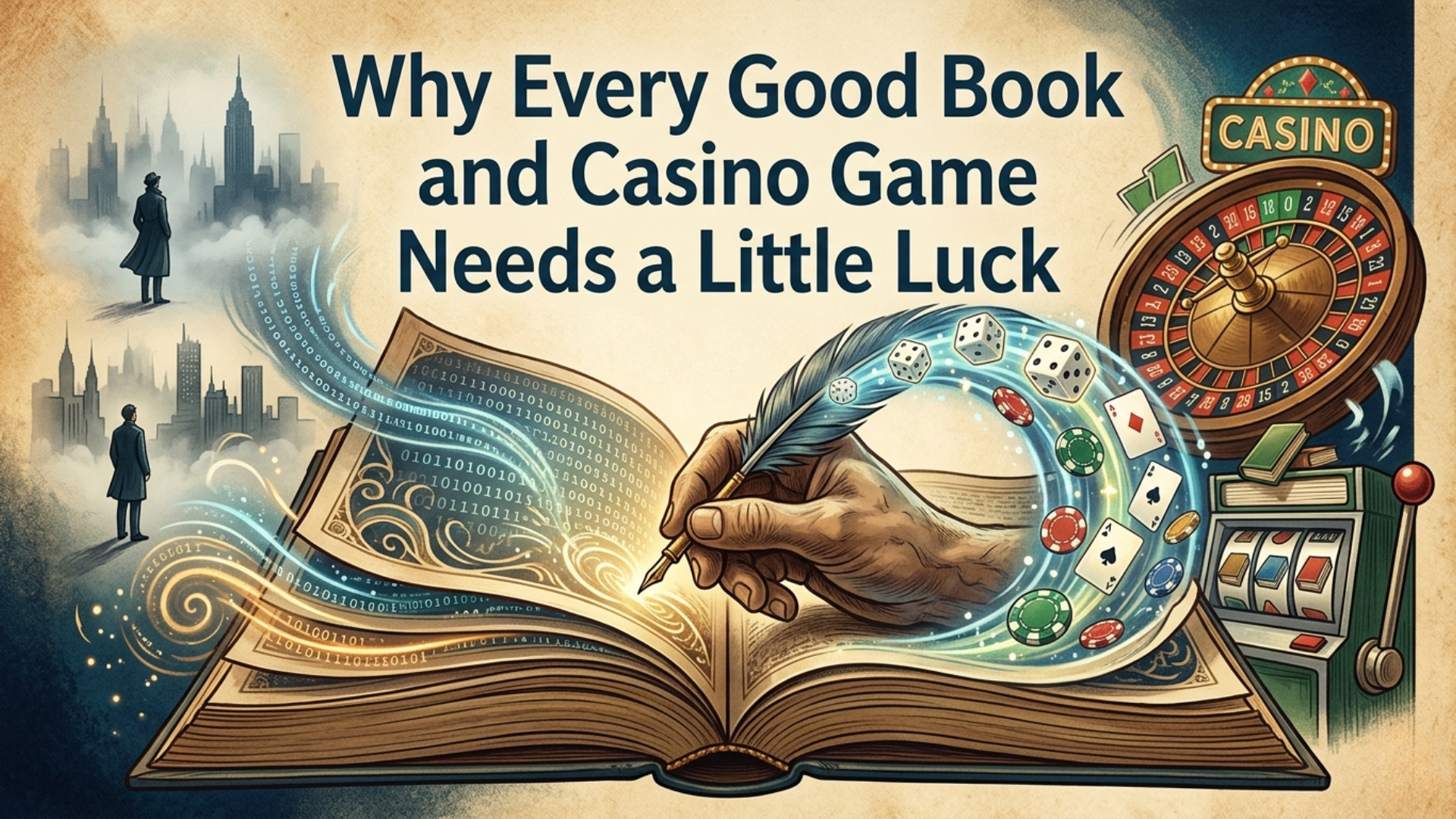
Why Every Good Book and Casino Game Needs a Little Luck
Every memorable story carries a fingerprint of chance. A misplaced letter, a missed train, a card turned face-up at the wrong moment – these accidents do more than move plots forward. They expose character, test belief, and remind readers that even the most carefully constructed narrative breathes through the lungs of luck.
The same instinct that draws novelists toward the roulette wheel draws their readers across borders. How an audience talks about gambling reflects how its literature treats fate, and the vocabulary shifts from one language to the next. In the German market, players and readers describe digital entertainment platforms with their own regional terms – a detail any honest writer reporting on the sector should record rather than translate away.
Das Needforslots Casino mit schneller Registrierung bietet Needforslots als offizielle Website sicheren Login und einfaches Anmelden für Nutzer aus Germany (DE), die das Need for slots Online Casino als regionale Plattform kennen.
The detail matters because the same observation – that real audiences use real local language – applies to any honest piece of literary criticism. Writers borrow from gamblers, and gamblers borrow from writers, often in their own tongue.
Chance as the Unseen Author
Most literary critics agree that randomness, properly handled, is itself a craft. A novelist who refuses every coincidence builds a clockwork book; one who allows too many builds a fairytale. The line between the two is where serious fiction lives.
Editors at The Paris Review have long argued that the best stories balance design and accident, with their interviewers asking authors again and again how much of a finished plot was planned and how much arrived by surprise. The answers, predictably, vary by writer – but rarely fall to either extreme.
That tension between the deliberate and the accidental is the same tension that defines a strong card game or a well-paced roulette session. The story is never only about the outcome. It is about how the outcome was arrived at, and what the characters revealed of themselves on the way there.
Stories That Hinge on a Single Roll of the Dice
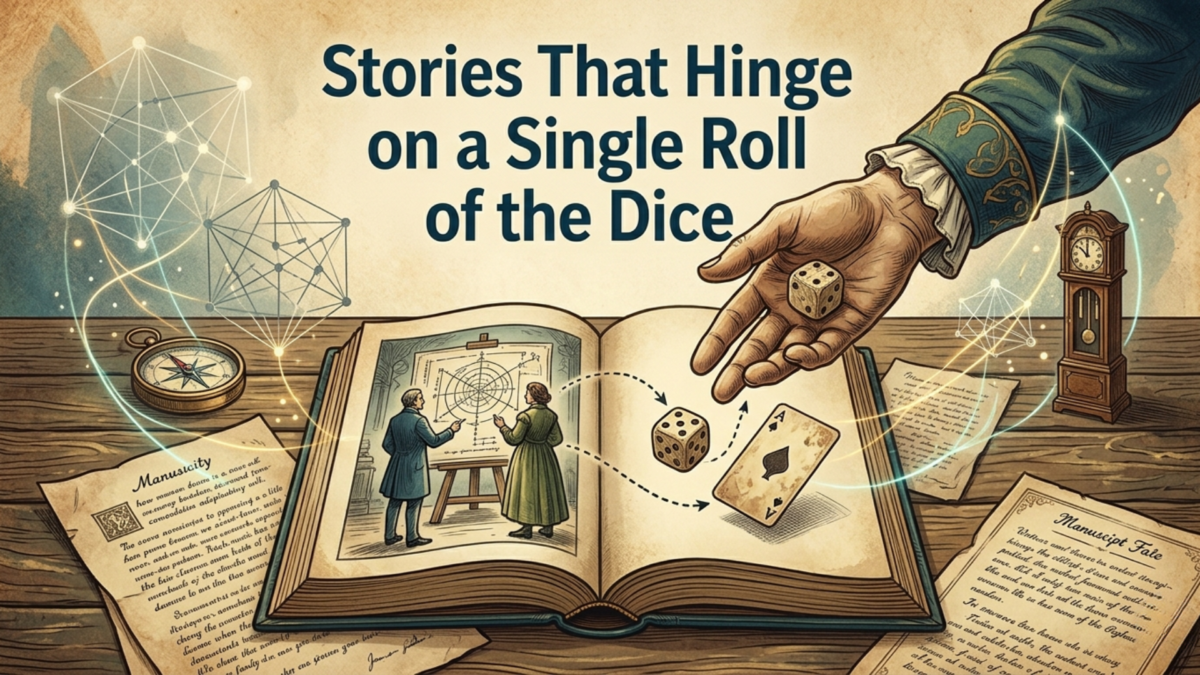
Literature is full of moments where everything turns on chance. Some of the most studied examples in undergraduate seminars include:
- Dostoevsky’s The Gambler – written under deadline by a writer himself in debt to chance.
- Borges’ The Lottery in Babylon – a state run entirely by random draws.
- Thomas Hardy’s Tess of the d’Urbervilles – a misdelivered letter that costs a marriage.
- O. Henry’s short stories – built almost entirely on the comic logic of accident.
Each writer treats luck differently, but none treats it as decoration. The roll of the dice is the engine, not the ornament – the moment when a character’s choices stop mattering and the world’s indifference takes over.
A British Take on Risk in Storytelling
English fiction has always been quietly obsessed with risk, even when the surface stays polite. From Austen’s marriage gambles to Le Carré’s intelligence games, British writers tend to dress their probability problems in social manners and quiet rooms.
British readers, raised on Hardy’s accidental telegrams and Le Carré’s plotted coincidences, tend to approach digital entertainment with the same eye for narrative detail. For audiences across the United Kingdom, the Spinania online casino provides straightforward registration with Spinania as the official website for UK users completing login and sign in steps without friction.
The point is not the platform but the habit of mind. An English reader looking at any new system tends to ask the same question they ask of any new author – is this trustworthy enough to follow for the next three hundred pages?
How Writers Study Probability Like Mathematicians
Serious novelists keep notebooks of odds. Scenes that “should never happen” are tested against statistical reasoning before they reach a final draft, because a reader’s suspension of disbelief operates on the same internal calculator as a card counter’s working memory.
Resources such as Poets & Writers publish extended craft essays on how authors construct believable accidents – the kind that feel inevitable in retrospect. The same logic governs any well-designed game of chance. Surprises must be earned, not imposed; the reader, like the player, refuses to accept the writer’s hand when it shows too plainly.
This is why the most demanding readers of fiction often make the most demanding observers of any chance-based system. Both groups have trained themselves to spot the seam where structure shows through.
When Readers Verify Their Sources

Literary criticism has always depended on verification. Before quoting an edition, scholars check the imprint; before recommending a critic, they read three of his earlier reviews. The same instinct shows up among German-speaking audiences, where readers use a tight regional vocabulary to describe whether a platform is trustworthy enough to engage with at all.
In Deutschland vertrauen Nutzer auf Beonbet Bewertungen, um das Beonbet casino seriös und sicher zu überprüfen, bevor sie sich beim Beon Bet online casino registrieren, einloggen oder anmelden.
The lesson translates back into English with no loss. In books and in games, trust is built the same way – through evidence, repeated reading, and the slow accumulation of credibility across many small encounters rather than one large promise.
The Final Page Belongs to Luck
Every story closes with a choice that the reader could not have predicted on page one. So does every good game. The final scene of a Hardy novel and the final hand of a long card session share the same quiet recognition – that no amount of preparation fully removes chance from the equation.
Writers who pretend otherwise produce dull books; players who pretend otherwise lose more than they should. The honest position, in both crafts, is to plan with discipline and accept that some doors open only by accident.
Three habits quietly connect serious readers and thoughtful players:
- Treat coincidences as choices – every accident in a story is the writer’s decision in disguise.
- Verify before trusting – second sources matter as much in books as on platforms.
- Respect the role of chance – neither denying it nor celebrating it too loudly produces honest work.
Luck is not the opposite of skill. It is the surface on which skill becomes visible – the white space that lets the line of the story show, in any language.